


I spent an hour in front of a school: here’s what I saw
I spent an hour sitting on a bench in front of a school, simply watching the flow of kids and teens as they walked out. What struck me first was the sameness: black and white outfits, simple silhouettes, minimal details, and almost identical makeup choices. Some walked alone, others in small clusters, but the visual language was surprisingly uniform. It wasn’t disinterest. It was something quieter, almost protective.
Their clothing felt like a shield. A way to blend in, soften the edges, avoid drawing attention in a world where attention can feel risky. The need to belong is powerful at that age, and it often shows up in the most visible place: what they wear. When everyone speaks the same visual language, individuality becomes something you hide until you’re sure it’s safe to show. The only small signals of personality peeking through were a tiny coloured bag, a discreet accessory, a slightly different silhouette.
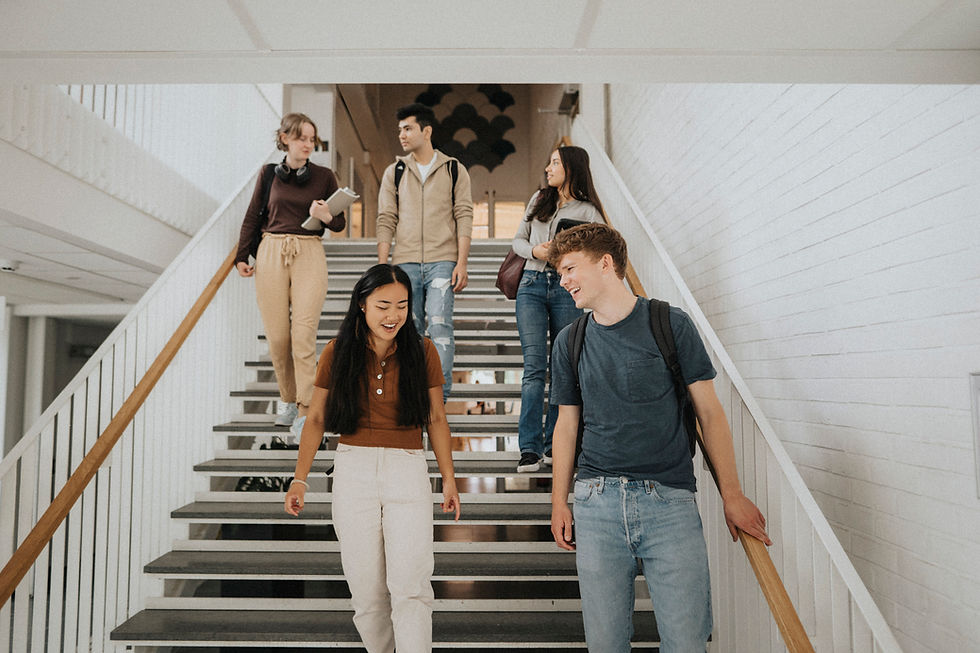
Watching them made me think about school uniforms. On the surface, giving them up seems like a step toward freedom and self‑expression. But the hidden consequence is often the opposite: students feel pressured to rise to their peers’ standards, mimic their tastes, and match the expensive items worn by those who can afford more. Without uniforms, the social hierarchy becomes visible on the body. Clothing becomes a currency, and belonging becomes something you “buy into”. At an age when identity is still forming, this pressure can be overwhelming.
In reality, school should be a place where young people feel equal, where they can learn, socialize, and explore who they are without becoming hyper‑aware of their appearance before their nervous system is even ready to regulate stress, comparison, or social pressure. When identity is still in its early stages, the safest environment is one where external expectations are softened, not amplified. Uniforms, or at least a simplified dress code, can create a baseline of equality that protects students from premature self‑consciousness.
What I saw wasn’t a lack of identity, but identity in hibernation. Teens are navigating friendships, expectations, social pressure, and the constant awareness of being watched by peers, by adults, by themselves. Dressing in a way that doesn’t stand out becomes a survival strategy. It’s easier to disappear into the group than to risk being misunderstood, judged, or excluded. And yet, beneath the monochrome, you can sense the quiet tension between wanting to fit in and wanting to be seen.
The challenge and the opportunity is helping them find balance. Not pushing them toward boldness they’re not ready for, and not encouraging conformity that erases them. Instead, guiding them toward small, safe expressions of self: a colour they love, a shape that feels right on their body, a detail that reflects their interests or mood. These micro‑choices build confidence over time, until style becomes less about protection and more about presence.
Watching them reminded me that personal style doesn’t start with clothes. It starts with safety: the safety to experiment, to take up space, to grow into yourself at your own pace. And sometimes, the most meaningful work we can do is help young people feel equal, grounded, and supported enough to let their real selves come forward, one small accent of colour at a time.
What unites children and parents is not just the challenges they face, but the opportunities they share: to express themselves, to feel comfortable in their bodies, to reconnect with joy, and to build confidence gently and sustainably. Style, when used intentionally, becomes a bridge or a way to support emotional wellbeing at every age.
If this resonates with you, you can explore a more structured reflection on the blog: “What Children and Parents Have in Common and How Style Coaching™ Supports Them All”


Comments